
Here’s my tried-and-tested 5-step framework for creating long-form content with AI.

Let’s face it – AI isn’t coming for our jobs (yet). But until AGI decides to take over my content marketing role, I’m going to maximise efficiency with our current AI tools.
Here’s the “I’m Still Relevant” blueprint for AI-powered content creation, and how I’m improving and streamlining my workflow with our dear AI friends.
Step 1: Keywords – because SEO still matters in 2025
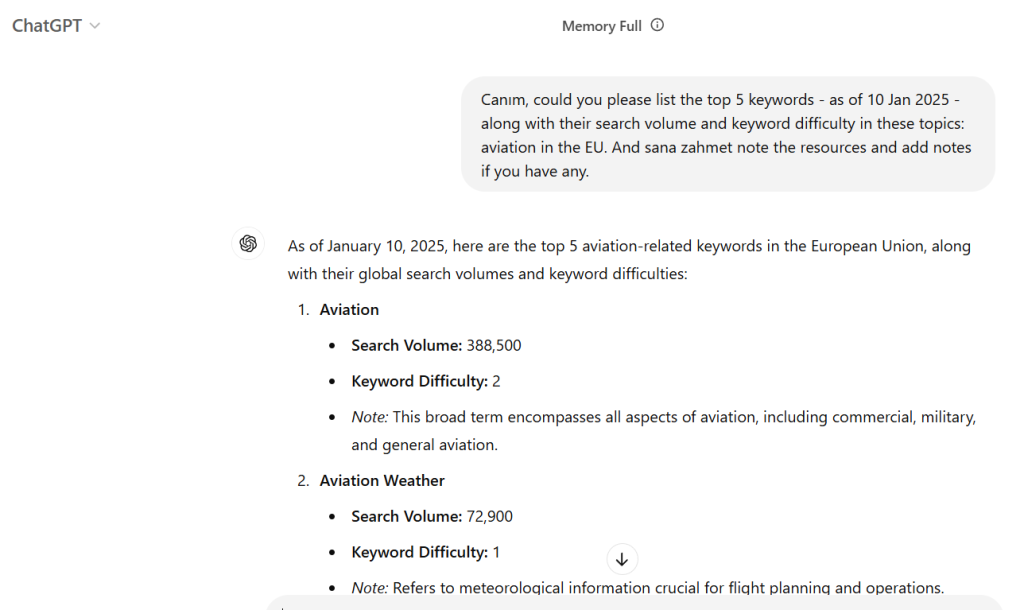
Every year, some marketers announce that certain marketing terms will die, and 99% of them simply don’t. Keywords and SEO still matter in 2025. I combine ChatGPT Premium and Google AI Studio with traditional SEO tools like Semrush and Ahrefs to:
- Get fresh keyword insights specific to my industry
- Compare AI suggestions with traditional tools
- Find those long-tail keywords that actually convert
Pro tip: When ChatGPT suggests an interesting keyword, always cross-check it with your SEO tools. Sometimes AI gets too creative or shares insights better suited for Google Ads.
Step 2: Research like an academic
Having worked with tech companies with complex products and long acquisition cycles, I’m used to spending quality time on research for long-form content. Google AI Studio and NotebookLM serve as my research assistants to:
- Access recent articles and news
- Digest complex topics efficiently
- Summarize research papers without the academic headache
- Find those golden nuggets of information that make content stand out
In my experience, Gemini 1.5 Pro works best for writing prompts for NotebookLM when I need a methodology to learn a topic before writing about it. Yes, prompting to learn how to prompt better is always a good idea.
Step 3: Writing with Claude
Apologies to all the great AI tools that help me improve my work, but Claude is by far my favorite for structuring long-form content. It understands context and tone like that friend who finishes your sentences. Here’s my process:
- Share the topic, context, and desired tone
- Ask for structure or full text
- Explore different angles
- Edit and refine until it sounds like me, not like a robot
That being said, I treat AI-generated text as inspiration and a starting point rather than the final product. Even if it really sounds almost perfect, I prefer to make changes to make it sound more like my style – depending on the work.
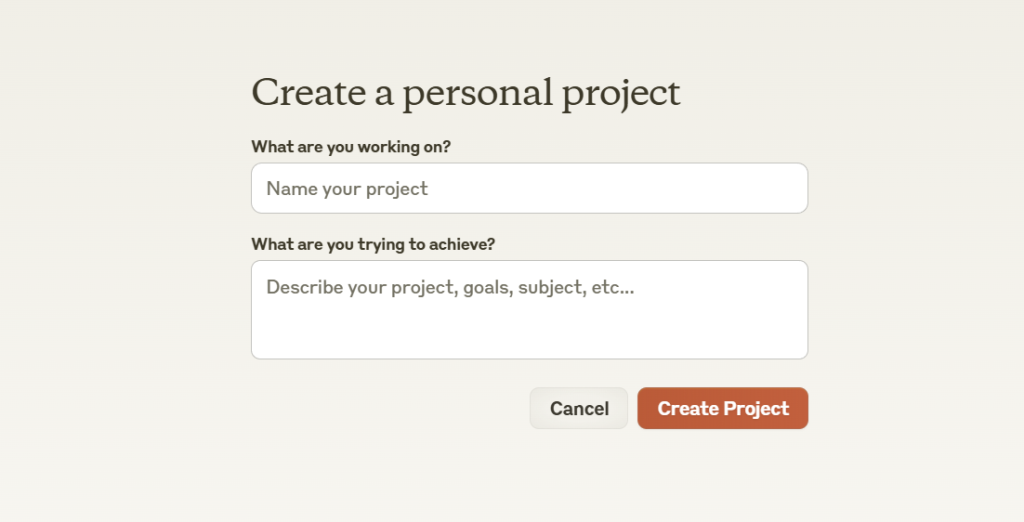
You can create a “project” on Claude if you want to upload information in advance and ask for different uploads on the same topic for ongoing work.
Step 4: The “Does This Sound Like Me?” check
This is where ChatGPT, my oldest AI friend, comes in with its honesty. I literally ask it: “Is there any AI-focused ‘not-me’ wording here? If yes, how would Gokce write it?”
Because nothing screams “AI-generated” like using “leverage” three times in one paragraph or phrases like “transforming businesses,” “X made easy,” or “cutting-edge technology” even once.

Step 5: The final polish with DeepL
Even though English has been my professional language for years and writing is my expertise, it’s still not my first language. That’s why this final step with DeepL is crucial for me.
Plus, this polishing step is valuable even for native speakers – it helps you:
- Explore alternative wording
- Make the text more concise
Bonus: Create blog images with Google AI Studio
Here are what I got from Gemini 1.5 Pro (or Flash) when I shared the final version of this text and asked it to create some images based on it:

When I asked for a more creative and fun alternative:

Next on my list is definitely MidJourney this year…
Making this process work for you
This process isn’t set in stone. It’s more like a playlist you can shuffle based on your mood. Some days you might skip steps, other days you might repeat them. The key is flexibility.
Prompting: An art form nobody asked for
Some people keep it short and sweet, but me? I write prompts like I’m crafting the next great novel. Blame it on my advertising background – when you’ve spent years writing creative briefs, concise just isn’t in your vocabulary anymore.
“But isn’t it faster to just write it yourself?” Sometimes yes. If you’re writing a quick social media post, you probably don’t need the full AI arsenal. But for long-form content? This process is a game-changer.
The best part? As AI tools learn your style, you learn better prompting, and it becomes this cycle of efficiency. It’s like having a team of assistants who gradually start finishing your sentences – slightly creepy, but useful.
Looking Ahead
Not AI but a team of AGIs will write this article way more “Gökçe” than I do. Probably soon. But until then, I’m enjoying this sweet spot where AI makes my work easier without making me obsolete.